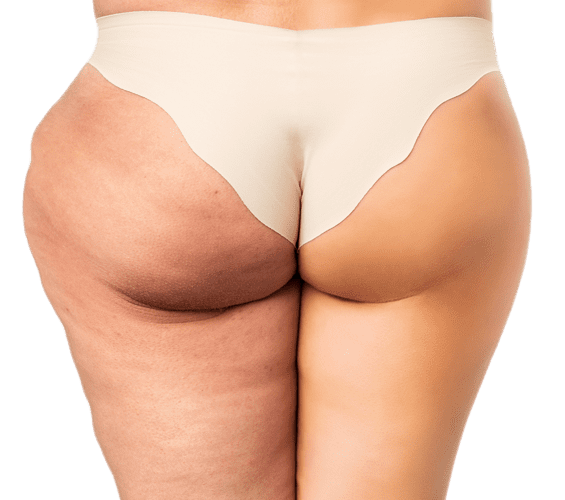





Why pain is one of the defining features of lipedema.
In our clinical experience, for many lipedema patients it isn’t just the visible changes in the legs or arms that matter most, but above all the symptoms that come with the condition.
Pressure-induced pain, sensitivity to touch, a feeling of tightness, or heavy legs can significantly affect daily life and reduce quality of life. Many patients report that even light touch can feel uncomfortable or painful.
But why does lipedema cause pain in the first place? On this page, we explain which factors current scientific understanding suggests may play a role, and why lipedema pain can vary so much from patient to patient.
Why Does Lipedema Cause Pain?
The exact causes of lipedema pain are still being intensively researched today. Current scientific findings suggest that various changes within the tissue may contribute to the development of these symptoms.
These include changes in fat and connective tissue, increased tissue stress, remodeling processes within the tissue structure, as well as immune and inflammatory processes. These changes may cause the tissue to react more sensitively to pressure, touch, and strain.
Much of the evidence suggests that lipedema pain arises from the interplay of several biological processes within the tissue.
Typical Pain Symptoms in Lipedema
The most common symptoms of lipedema include:
pressure-induced pain in the affected tissue
increased sensitivity to touch
a feeling of tightness in the legs or arms
heavy legs or heavy arms
rapid fatigue under strain
Increasing symptoms: Symptoms often intensify over the course of the day, especially towards the evening.
Many patients report that even light pressure on the skin or tissue feels uncomfortable. In some cases, even everyday touch can trigger pain.
Changes in Fat and Connective Tissue
Lipedema is more than a simple increase in fat tissue. Scientific studies show that the structure of the tissue itself also changes. Alongside an increase in fat tissue, changes have also been described in the connective tissue and surrounding tissue structures.
These changes can affect the properties of the tissue and are considered a possible factor in the development of typical lipedema symptoms.
Why Pain Is a Defining Feature of Lipedema
Today, pain is considered one of the most important defining characteristics of lipedema. While many people initially associate the condition with increased fat tissue or larger circumference in the legs and arms, for many patients it is the symptoms themselves that matter most.
Pressure-induced pain, sensitivity to touch, and a feeling of tightness can provide important indications of lipedema and help distinguish the condition from simple weight gain or ordinary subcutaneous fat. That is why pain plays an important role in the diagnosis and assessment of lipedema.
For this reason, experienced lipedema specialists look not only at visible tissue changes, but also at the symptoms themselves and their impact on the patient’s daily life.
Why are my lipedema-affected legs sensitive to touch?
One possible explanation is changes in the fat and connective tissue, along with chronic tissue irritation. This may make the tissue more sensitive to pressure and touch. The exact mechanisms are still being researched.
Why Pain Varies So Much From Person to Person
One of the distinctive features of lipedema is that symptoms can vary enormously from patient to patient. While some patients report significant pain early on, others have comparatively few symptoms despite pronounced tissue changes. These differences show that lipedema is a highly individual condition that cannot be assessed based on circumference, weight, or stage alone.
Why Two Patients Can Have Different Symptoms
In our clinical experience, the intensity of symptoms is often difficult to predict. Two patients with a seemingly similar clinical picture can experience their daily lives in completely different ways. That is why assessing lipedema should always take the individual patient’s situation into account, rather than relying solely on visible external changes.
Current research suggests that several biological processes interact in lipedema. Differences in fat and connective tissue, immune activity, or individual pain processing may all contribute to how strongly symptoms are perceived.
Stage and Pain Don’t Always Match Up
Many people assume that a more advanced lipedema stage automatically means more severe pain. In practice, however, the picture often looks different. Patients at stage 1 can experience significant symptoms, while others at stage 2 or 3 experience comparatively little pain.
This shows that the visible severity of the condition describes only part of the overall picture. Individual factors and the processes occurring within the tissue appear to be at least as important as outward appearance.
Important to Know
Can pain already occur at stage 1?
Yes. The extent of pain doesn’t always depend on the stage of lipedema. Some patients already report significant symptoms at an early stage, while others experience comparatively little pain despite advanced tissue changes.
Does a higher stage automatically mean more pain?
No. Visible stage and pain intensity are not always directly related. Individual factors and the processes occurring within the tissue appear to be at least as important as outward appearance.
Taking Pain Seriously
Many lipedema patients report that their symptoms were not properly understood or taken seriously for years. It is not uncommon for patients to hear statements like "you should exercise more," "you should lose some weight," or "that’s normal for being overweight." For many women, this marks the beginning of a long journey of uncertainty — feeling pain, yet receiving no plausible explanation for their symptoms.
That is exactly why it is so important to take symptoms seriously and, when assessing possible lipedema, to consider not only visible changes but also the individual symptom pattern.
Pain Is Not Imagined
One of the most difficult things for many patients is the feeling of not being taken seriously about their symptoms. Because pain isn’t visible, it is often underestimated by others. Yet those affected often experience, day after day, just how much these symptoms can impact their quality of life.
Even though not all causes of lipedema pain are fully understood yet, current scientific findings suggest that real biological processes underlie these symptoms.
Why Symptoms Should Be Taken Seriously
Pain can affect many areas of life. Some patients avoid certain activities, others limit physical exercise, or feel increasingly burdened at work and in daily life. There is also an emotional component: someone who has experienced pain for years without an explanation often feels misunderstood or left alone.
That is precisely why pain symptoms should be an important part of every lipedema diagnosis. It is not the visible tissue change alone that determines how burdened a patient feels, but above all the symptoms she experiences every day.
Modern Lipedema Medicine Looks Beyond Appearance
Modern, individualized lipedema treatment does not focus exclusively on circumference measurements or disease stages. Equally important are the tenderness of the tissue, limitations in daily life, mobility, and the patient’s personal quality of life.
The goal of modern diagnostics is not only to assess visible changes, but above all to understand and take seriously the symptoms experienced by the patient. Because it is often the pain — and its impact on daily life — that affects quality of life the most.
Frequently Asked Questions About Lipedema Pain
No. Pain in lipedema is a real symptom. Current scientific findings show that changes in fat tissue, connective tissue, and the immune system may be involved in its development.
Patients describe lipedema pain in very different ways. Typical symptoms include pressure-induced pain, sensitivity to touch, a feeling of tightness, and heavy legs or arms. Many patients report that even light touch can feel uncomfortable or painful. Symptoms often increase over the course of the day and can significantly affect quality of life.
The exact causes are still being researched today. Experts currently believe that several factors work together. These include changes in fat and connective tissue, increased tissue pressure, chronic tissue irritation, and inflammatory and immune processes. The pain likely doesn’t stem from a single cause, but from the interplay of several biological mechanisms.
Many lipedema patients report that symptoms can persist despite regular exercise or weight loss. According to current scientific understanding, lipedema pain doesn’t depend on body weight alone. Changes in fat and connective tissue, along with other processes within the tissue, may also contribute to these symptoms. That’s why weight loss doesn’t automatically mean that pain will fully disappear.
It can, but it doesn’t have to. Some patients report increasing symptoms as the condition progresses, while others experience largely stable symptoms over longer periods. How symptoms develop depends on various individual factors.
Physical activity can help many patients maintain mobility and improve overall wellbeing. At the same time, exercise is not a substitute for medical diagnosis or treatment. Which measures make sense should always be assessed individually.
If pain, tenderness, or a feeling of swelling is affecting your daily life or getting worse, you should see a doctor. A specialized diagnostic evaluation can help classify your symptoms, identify possible causes, and discuss individual treatment options.