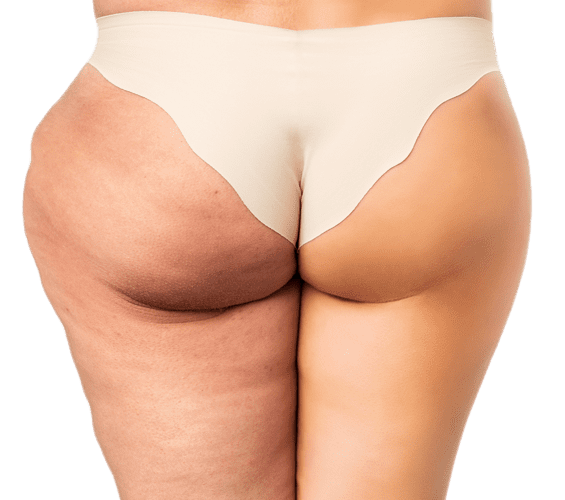





Why lipedema and lymphedema are two different conditions, despite similar symptoms.
Lipedema and lymphedema are still frequently confused with one another in everyday medical practice. Both conditions can cause swelling, a feeling of tightness, pain, and discomfort in the limbs.
Even so, in our view, these are two fundamentally different conditions.
This distinction is precisely what matters for an accurate diagnosis, the right treatment, and understanding the symptoms.
Key Differences Between Lipedema and Lymphedema
| Feature | Lipedema | Lymphedema |
|---|---|---|
| Distribution | usually symmetrical | often asymmetrical |
| Feet/toes | usually spared | typically affected |
| Primary problem | increase in fat, connective tissue, and skin | impaired lymphatic drainage |
| Pain | often painful to pressure | often more of a tightness sensation early on |
| Tissue | soft, uneven, nodular | increasingly hardened/fibrotic |
| Cause | multifactorial, hormonal/genetic factors discussed | damage or malformation of the lymphatic system |
| Typical triggers | puberty, pregnancy, hormonal changes | surgery, tumors, radiation, congenital defects |
| Stemmer's sign | usually negative | often positive |
| Hand/foot involvement | often not affected | often affected |
| Course | chronic, progressive | chronic, progressive |
What Happens in True Lymphedema?
In classic lymphedema, the primary problem lies in impaired lymphatic drainage.
The lymphatic vessels can no longer adequately remove interstitial fluid - meaning tissue fluid between the cells.
This causes a backup of protein-rich fluid in the tissue.
Possible causes include:
Typical Features of Lymphedema
In our experience, true lymphedema usually shows:
Typical Features of Lipedema
In lipedema, by contrast, our clinical experience shows primarily an increase in tissue - a change in fatty tissue, connective tissue, and skin.
Typical features include:
The feet are usually spared.
Why Lipedema Can Still Cause Swelling
Many of those affected report worse symptoms in the evening, increasing swelling, more tightness in warm weather, or worse symptoms after standing for long periods.
The reason: as tissue volume increases, so does interstitial pressure, along with the strain on microcirculation and small blood vessels.
Our View: Not Every Case of Foot Swelling Is Lymphedema
In our clinical experience, it's a common misunderstanding that every instance of foot swelling automatically means classic lymphedema.
When the connective tissue's capacity to store fluid is exceeded, excess free fluid builds up in the loose subcutaneous tissue.
This fluid ultimately follows gravity, heat, daily strain, and physical factors.
The Role of Connective Tissue and Blood Vessels
Current scientific research describes fibrosis, changes to the extracellular matrix, vascular changes, increased vascular permeability, and changes to small lymphatic vessels as important components of the condition.
This makes it easier for fluid to escape and further increases interstitial tissue pressure.
The Vicious Cycle of Lipedema
In our view, this creates a medical vicious cycle:
Why the Distinction Matters So Much
In our view, lipedema and lymphedema aren't identical conditions.
They can overlap, influence one another, or occur together.
Even so, an accurate clinical distinction is essential.
Modern Diagnostics Require Clinical Experience
In our view, distinguishing between lipedema and lymphedema doesn't come from tables or individual measurements alone.
What matters is clinical observation, palpation findings, distribution patterns, symptoms, tissue quality, disease course, and the patient's entire individual situation.