




Why the diagnosis is so often made too late, or not at all.
Many Patients Go Through Years of Doctor-Hopping
In our view, lipedema is one of the most frequently misunderstood conditions in modern medicine.
For many years, in our daily clinical work, we've seen patients who aren't taken seriously, who receive incorrect diagnoses, who are classified as "simply overweight," or who go for years without a clear explanation for their symptoms.
For many of those affected, this comes with frustration, insecurity, shame, social strain, and long medical odysseys.
It's not uncommon for tears to be shed during the first consultation - simply because their symptoms are being taken seriously and given a medical explanation for the first time.
Many patients struggle for years with uncertainty and the feeling of not being understood. That's what makes it so meaningful when a doctor says: we understand your symptoms and can explain what might be behind them.
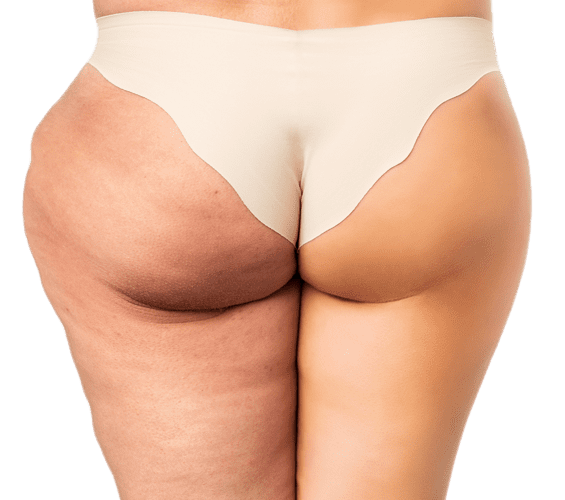
Many people affected notice from a young age that their legs or arms look different from their friends' or family members'. Despite exercise, dietary changes, or weight loss, certain areas of the body often remain unchanged.
At the same time, symptoms develop that are barely visible from the outside. Pain, pressure sensitivity, or a feeling of heavy legs aren't always apparent and are therefore often underestimated.
Why Lipedema Is So Often Misdiagnosed
Lipedema isn't a simple visual diagnosis.
Many people affected are surprised to learn that the diagnosis can't be made from photos, body measurements, or outward appearance alone.
To this day, there's no definitive blood test, no single MRI finding, and no reliable biomarker that can conclusively prove the diagnosis.
That's exactly where the particular challenge lies: lipedema can present differently from patient to patient, and can't be reduced to individual measurements or findings.
Some patients report significant pain, pressure sensitivity, or a strong feeling of heaviness despite relatively minor visible changes. Others show clearly visible changes in the legs or arms yet experience comparatively few symptoms.
This makes clear why lipedema can't be assessed by outward appearance alone.
Diagnosing lipedema therefore requires a comprehensive clinical assessment combining examination, palpation findings, typical distribution, symptoms, disease course, and medical experience.
And that's precisely the challenge: many doctors see only a handful of lipedema patients per year, some none at all. This can make it harder to become familiar with the different presentations of the condition and to distinguish it from other causes of increased girth or discomfort.
Frequently Confused With Obesity
Lipedema is especially often confused with obesity.
In our view, that's understandable, but medically it's often oversimplified.
Many people affected hear, for years: "You just need to lose weight."
This overlooks pain, pressure sensitivity, a feeling of heaviness, or the typical fat distribution pattern - and that's often exactly where the real misunderstanding lies.
At the same time, it's important to understand that lipedema and obesity aren't mutually exclusive. Both conditions can occur independently of one another, but they can also occur together.
Many patients experience that, despite consistent dietary changes, exercise, and weight loss, they do lose body weight overall - yet the changes typical of lipedema in the legs or arms remain unchanged.
While ordinary fatty tissue often responds to weight loss, many people affected report that the areas typical of lipedema change far less than other parts of the body. Symptoms such as pain, pressure sensitivity, or a feeling of heaviness can persist regardless.
This exact discrepancy often contributes to lipedema being confused with obesity, or to a patient's situation being misjudged. This is precisely why a careful examination is so important, to correctly interpret symptoms and physical changes.
Why BMI and Weight Alone Are Often Not Enough
The BMI measures only body weight in relation to height.
It doesn't distinguish between fatty tissue, connective tissue, skin, swelling, or individual tissue changes.
In lipedema in particular, the typical anatomical combination of more fatty tissue, more connective tissue, and more skin often leads to more volume, larger measurements, higher body weight, and therefore often a higher BMI as well.
That's why we consider it problematic to assess the condition based on BMI thresholds or weight categories alone.
Especially with more pronounced changes, the additional tissue can have a meaningful impact on body weight and measurements. In our view, a patient's situation therefore shouldn't be assessed based on a single BMI value alone.
Two people can have the same BMI and still present with completely different symptoms, tissue qualities, and physical circumstances.
What Photos Can Show - and What They Can't
Many people affected wonder whether lipedema can be identified from photos.
Photos can provide important clues. Combined with medical history, described symptoms, and other information, typical distribution patterns and notable features can often already be assessed fairly well.
That's why photos, especially as part of an online consultation, can help provide an initial professional assessment and avoid unnecessary travel.
At the same time, images have their limits. Important information such as tissue quality, pressure sensitivity, or specific palpation findings can't be assessed from photos.
Photos can therefore support a clinical examination, but they can't fully replace one. For a comprehensive assessment, an in-person examination remains an essential part of the diagnostic process.
Why the Misunderstanding Is Understandable
At the same time, it must be said honestly: the causes of lipedema still aren't fully understood today.
Although the condition has been described for decades, it's only received significantly more attention in recent years. The scientific evidence base also continues to evolve, and many aspects are still being debated.
On top of that, symptoms can vary widely in severity. Not every patient shows the same symptoms, the same course, or the same tissue quality.
All of this contributes to lipedema still being frequently underestimated, overlooked, or misdiagnosed today.
Recognizing Lipedema Means: Looking, Feeling, Listening
In our experience, the diagnosis doesn't come from individual numbers or tables.
What matters is bringing the patient's symptoms together with the clinical findings. This includes examining the tissue distribution, palpation, the tenderness of specific areas, tissue quality, and the patient's personal medical history.
Many important clues only emerge in conversation. When did the symptoms start? Did they change after hormonal shifts? What impact does the pain have on daily life, work, exercise, or quality of life?
Only the complete picture from all of this information typically allows for a well-founded clinical assessment.
That means:
This combination of examination and conversation is a crucial part of a nuanced lipedema diagnosis.
Why Specialization Is Crucial
Specialization matters so much in lipedema above all because not every increase in girth, swelling, or pain automatically means lipedema.
Because:
Not every swelling is lipedema.
Not every case of lipedema looks the same.
And not every patient fits neatly into rigid stages or tables.
Especially with early or less clear-cut findings, clinical judgment can be crucial in distinguishing between different underlying causes.
These can include, for example, obesity, lymphatic changes, hormonal influences, venous conditions, or other medical factors.
That's why a specialized assessment is especially important when pain, tissue changes, and the patient's personal burden are the main focus.
Modern Lipedema Medicine Needs More Than Numbers
Modern lipedema medicine shouldn't look exclusively at individual measurements, body weight, or standard tables.
What matters is how severely symptoms, pain, mobility, function, and tissue quality affect the patient's daily life.
The goal of modern diagnostics therefore shouldn't just be classifying a stage. Understanding how the condition affects work, movement, quality of life, and personal wellbeing matters just as much.
That, precisely, is the difference we see between a purely schematic approach and a lipedema diagnosis that considers the patient as a whole person.