




Understanding the relationship between body weight, health, and disease is essential for making informed decisions about your own well-being. With that in mind, we take a closer look at the role of the Body Mass Index (BMI) in relation to lipedema - am I just heavy, or do I have lipedema?
The Body Mass Index
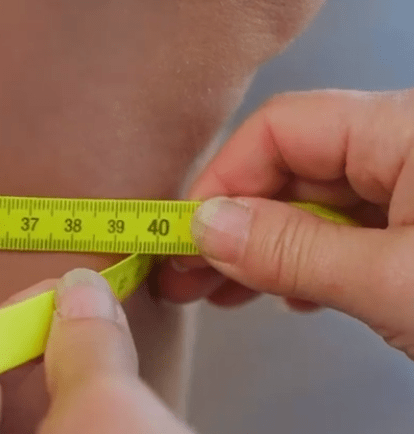
The BMI is a widely used tool for assessing body weight relative to height. It's calculated by dividing a person's body weight in kilograms by the square of their height in meters. The resulting number gives a rough overview of weight relative to height and is grouped into categories such as underweight, normal weight, overweight, and obesity. However, the following limitations apply:
Limitations of the BMI (Body Mass Index) in Relation to Lipedema
- The BMI doesn't distinguish between muscle mass and fat mass
- The BMI doesn't account for body composition or the distribution of fatty tissue
- The BMI doesn't distinguish between sex and age
- The BMI isn't suitable for certain populations (athletes, pregnant women, etc.)
- The BMI can lead to stigmatization
Lipedema: A Complex Condition
Lipedema is a chronic condition that mainly affects women and is characterized by an uneven, abnormal increase and alteration of fatty tissue. It causes pain and can lead to swelling and restricted mobility. Despite advances in medical research, the exact causes of lipedema still aren't fully understood, but genetic predisposition and hormonal influences are considered important factors.
The Limits of BMI in Lipedema
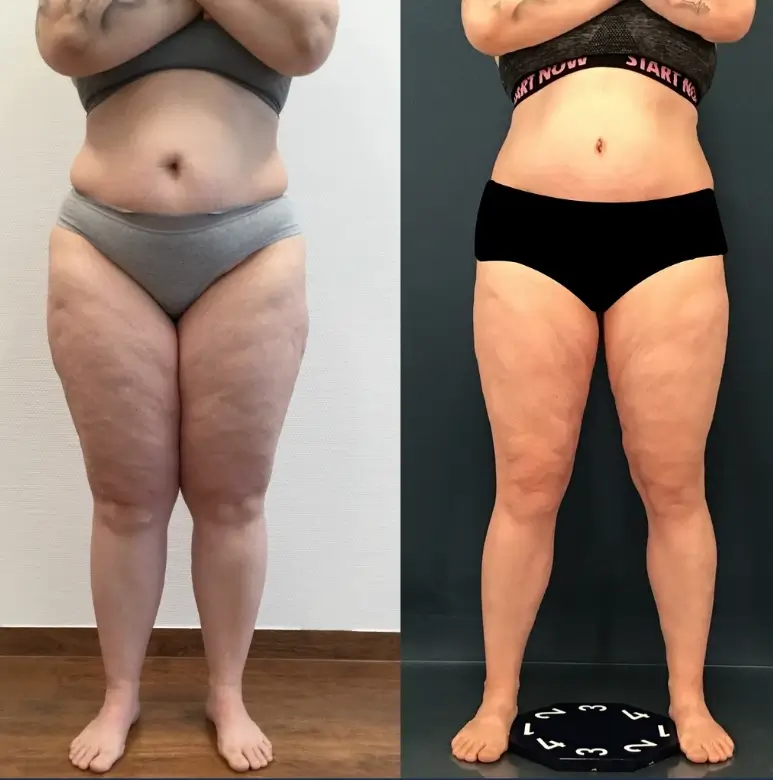
For people with lipedema, the BMI is an inadequate measure of body weight. That's because the BMI doesn't provide an accurate picture of body composition in lipedema patients. People with lipedema can have a higher BMI without actually being overweight, since lipedema can affect weight disproportionately.
What Does the S2k Guideline Say About Lipedema?
The BMI, along with other calculated measurements such as the waist-to-height ratio (WHtR), waist-to-hip ratio (WHR), and the lipohypertrophy quotient (LipQ), are mentioned in the guideline without their relevance being proven. No treatment consequence can be derived from them either, which is why we at med-plast deliberately choose not to use them.
S1 guidelines are recommendations from expert groups. An S2k guideline is a consensus-based guideline ("k"), which has gone through a structured consensus-building process.
Not sure if this applies to you?
Book a free, no-obligation consultation with our specialists.
Lipedema Diagnostics and Individual Treatment Strategy at med-plast
Instead, we rely on comprehensive diagnostics and assessment that takes various aspects into account, in order to develop a differentiated, individual treatment strategy. Here, the focus is on the individual distribution and severity of the lipedema. At med-plast, these are always assessed in relation to the patient's symptoms - especially pain - which requires a thorough physical examination. This, in turn, depends on the combination of clinical experience, knowledge, and, in particular, the surgical skill of the plastic surgeon, who should absolutely be specialized in this condition.
Lipedema Patients Need a Holistic Perspective
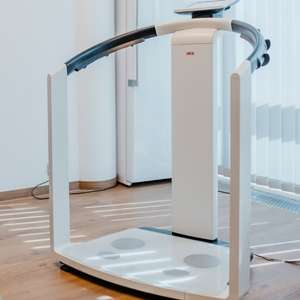
It's crucial to take a holistic view of health, especially for lipedema patients. Focusing on the BMI alone can lead to misjudgments and potentially to incorrect conclusions about health and treatment needs. It's important to consider other factors, such as body composition, overall health, and the individual needs of each patient. We examine every patient thoroughly, regularly performing ultrasound examinations and bioelectrical impedance analysis (BIA), among other things, to arrive at an individual, holistic solution. Most important throughout this process is fully transparent communication, which adds considerable value to understanding lipedema. Only this makes it possible, further down the line, to make important decisions such as: "should I have surgery because of my lipedema?"
Holistic Approaches in Lipedema Treatment
Comprehensive care for people with lipedema requires a multidisciplinary approach. This includes specialized medical/plastic-surgical care, physical therapy, nutritional counseling, and, if needed, psychological support. Our individually tailored treatment plans help improve quality of life, relieve pain, and support mobility. In our best cases, former patients go on to live a life without lipedema, following optimal surgical treatment.
The BMI Doesn't Help With Assessing Lipedema
The BMI is a common tool for roughly estimating body weight, but it shouldn't be used to assess the health of lipedema patients. In particular, the question of whether surgery is appropriate cannot be answered using the BMI. A holistic view that accounts for individual needs and the complexity of lipedema is essential. Only this way can optimal treatment outcomes be achieved and the best possible quality of life be restored for those affected.
"Whether the BMI should be used at all is fundamentally worth questioning. In the context of lipedema, we consider the BMI unsuitable."
Dr. med. Georg Reumuth
We're happy to advise you individually and without obligation on your path to a life free of lipedema.
Book an Appointment