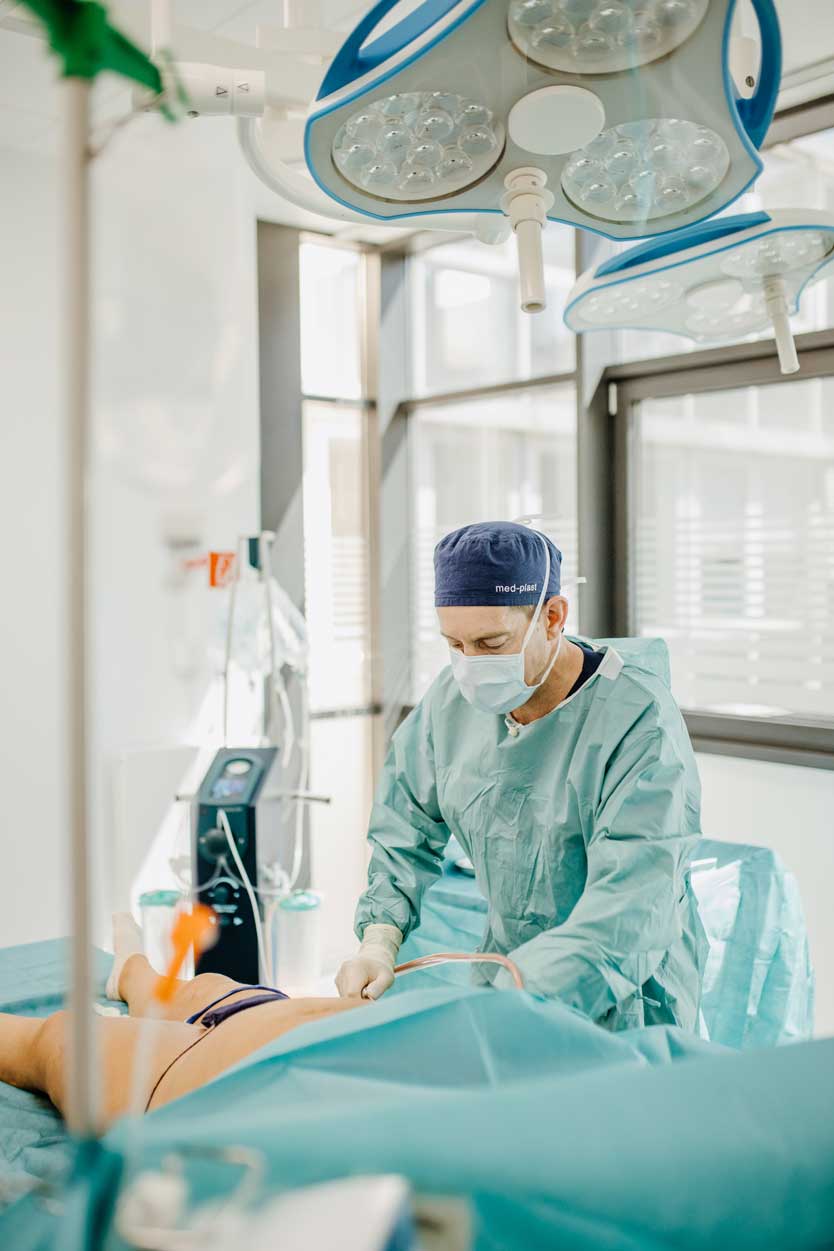





The struggles our patients bring with them when they come to us about their "thick legs" are very varied. Almost always, it's about pain, a feeling of heaviness, and restricted movement. But it's also about dissatisfaction with their own feminine appearance, social pressure, and uncomfortable looks and prejudice.
By the way: on the topic of prejudice, we've summarized our knowledge and our thoughts in another article.
Thick Legs or Lipedema?
One thing we need to clarify right away: although lipedema and obesity are two different conditions, they often appear together. This overlap can be one reason lipedema is recognized very late, or not at all. But what's the actual difference between simply "thick legs" and lipedema?
Here's a quick overview:
| Lipedema | "Thick Legs" / Obesity | |
|---|---|---|
| Sex | Female | Female / Male |
| Pain | Yes - persistent, severe pain | No |
| Bruising | Yes - very easily | No |
| Disproportion | Yes | No - often symmetrical fat distribution |
| Effect of Diet | No - no meaningful effect | Yes |
| Foot Swelling | No | Yes, depending on stage |
Highlighted column: typical characteristics of lipedema.
The Quick Self-Test - Pinch Yourself!
The biggest difference that sets lipedema apart from obesity is therefore the presence of pain.
Another subtle difference: healthy people feel more pain on the inner side of their thighs than on the outer side.
That's because of the higher density of fine nerve endings on the inner skin of the thighs. With lipedema, it's exactly the opposite! Because of the pressure that excess fat puts on your thighs, the outer sides often hurt more. This is due to the fat distribution typical of lipedema, which tends to be more pronounced on the outer thighs compared to the inner thighs.
Some patients report no pain at all during the initial consultation, yet the physical exam suddenly reveals a very different picture. The so-called "pinch test" can quickly give you a better sense of your condition. Try it yourself!

Not sure if this applies to you?
Book a free, no-obligation consultation with our specialists.
How to Do the Lipedema Pinch Test
Stand up straight and gently pinch the inner side, then the outer side, of your thigh. As shown in the picture, take a raised fold of skin between your thumb and index finger.
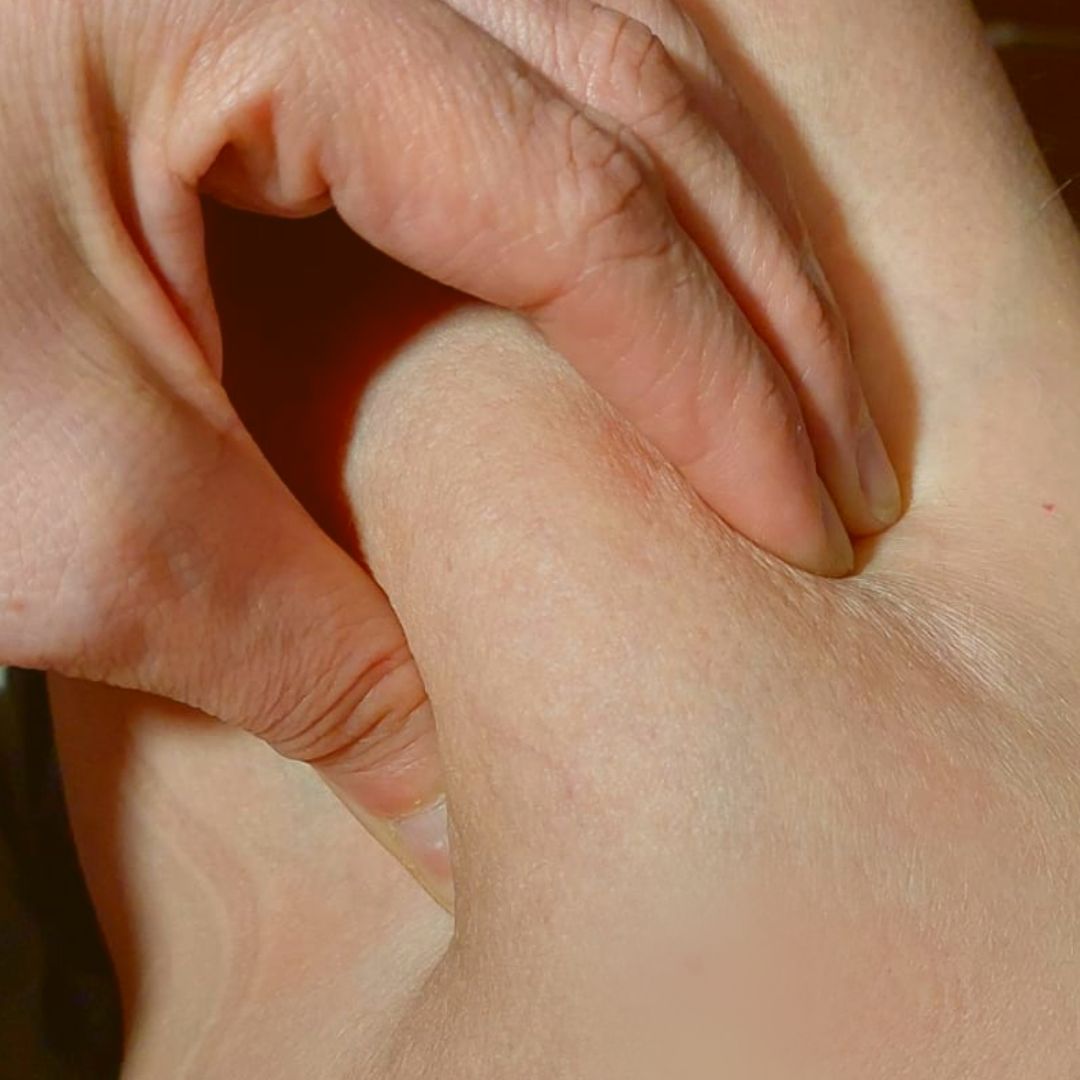
- Do you already feel pain from a light pinch? Then you very likely have lipedema. The increased number and size of fat cells press painfully on the sensitive nerve fibers in your skin.
- Do you feel only mild pain when pinching, or at least an uncomfortable feeling of pressure? These are also signs of lipedema.
- Do you feel no pain at all? It can still be lipedema if the appearance matches, since each person develops a different pain tolerance over the years.
Nodules Under the Skin
Palpable nodules deep in the tissue, which can also be painful during the pinch test, are, based on our findings, inflammatory processes. As with psoriasis, the underlying cause in lipedema is increased cell production.
The newly formed lipedema fat cells also die off faster, after a shorter life cycle. The resulting inflammatory process breaks down these dead lipedema fat cells through the immune system and clears them via the lymphatic system. These inflammatory processes, and the inflammatory mediators released during them, explain the palpable, painful nodules.
To date, no scientifically confirmed sensory nerve fibers have been found within fatty tissue itself. Looking closely, this means your lipedema fat cell itself cannot actually hurt. Based on our observations and experience at med-plast, it's the indirect pressure of the excess fat volume on the skin's receptors that produces and transmits the pain at the skin's surface. That's why the pain from the two-finger pinch test is more informative than simply pressing down on the tissue with one finger. In other words: with a one-finger pressure test, the individually perceived pressure pain in lipedema is always lower than with the two-finger pinch test.
Obesity or Lipedema - Why Do We Distinguish?
Telling lipedema and obesity apart isn't easy, but it's important so that we can treat you correctly. What's certain is that for lipedema, only liposuction - surgical fat removal - helps. At least when it comes to truly getting the condition under sustainable control.
The causes of obesity can be varied - from an unhealthy lifestyle, to medications, to genetic factors.
The causes of lipedema, on the other hand, are not yet fully understood. Lipedema develops when the subcutaneous fatty tissue abnormally increases. This increase in volume affects both the number of fat cells (called hyperplasia) and the size of the fat cells (called hypertrophy). For both conditions, exercise and a healthy diet can help keep the condition from worsening further, at least temporarily. Everyone is different and responds differently to internal and external influences. Find your own individual path!

Lipedema Self-Test
Would you like to find out whether you have lipedema? Many lipedema patients have no idea they're affected by the condition. On average, it takes up to 10 years from the first symptoms appearing until the condition is diagnosed by a doctor. That's exactly why educating both patients and physicians about the condition matters so much. Unfortunately, there is still no diagnostic test that can definitively confirm the condition in patients. Science is currently at an early stage of identifying specific indications or markers for the changes in diseased fat cells. Examinations such as ultrasound also don't allow for a definitive test. In the end, what remains is the clinical diagnosis - the look and feel of the skin, assessed by a doctor experienced with lipedema, such as a phlebologist, gynecologist, or plastic surgeon.
A first indication of possible lipedema can be a self-test. You can get a first overview of the symptoms in our 20 signs "Do I have lipedema", or take our lipedema self-test with questions about pain, a feeling of pressure, tendency to bruise, body proportions, diet, and family history.
In any case, only an experienced doctor, through a personal conversation and a clinical examination, can make a definitive diagnosis.
Simply book a no-obligation consultation with our lipedema doctors. We're happy to help.
Recognizing Lipedema
Are you unsure whether your symptoms - thick legs, pain, and restricted movement - are related to lipedema?
You're not alone: as a rule, more than 10 years pass between the first symptoms and the diagnosis.
According to studies, up to 10% of women are affected by this progressive condition.
Take our lipedema self-test, developed by our lipedema doctors.
Not sure whether you have lipedema? Feel free to send us photos of your physical condition (no face) by email for a first impression.
Book an Appointment Send Photos by Email