




Pain, tension, a feeling of pressure, restricted mobility... Most people with lipedema live with all these physical symptoms, and more, every single day. But behind these so-called somatic symptoms hides a psychological component that, unfortunately, is still stigmatized. We're here to raise awareness.
Why Is Awareness So Important?
Diagnosis: lipedema. For patients, this marks the beginning of a journey with many stops ahead: starting with the first visit to the doctor, through exhausting conservative therapies, and usually ending with the last major step of surgery. And then, finally, comes the long-awaited freedom from pain, and the journey is over... or is it? Sadly, appearances are deceiving more often than expected. It's not that simple. Often, several years pass between diagnosis and the successful completion of lipedema treatment. A lot of time, and many emotional hurdles, that those affected have to overcome. That doesn't leave the human psyche unaffected. Because it's not just the physical pain before surgical treatment that weighs on patients, but also the emotional burden that comes with it, which they carry with them for years. And in many cases, this burden isn't treated the way the physical symptoms of lipedema are, even though it's at least as important.
Here at med-plast, we want to raise "awareness" and shed light on this often-overlooked topic: PSYCHOLOGICAL STRAIN IN PEOPLE WITH LIPEDEMA.
Frustration and Guilt in Lipedema Patients
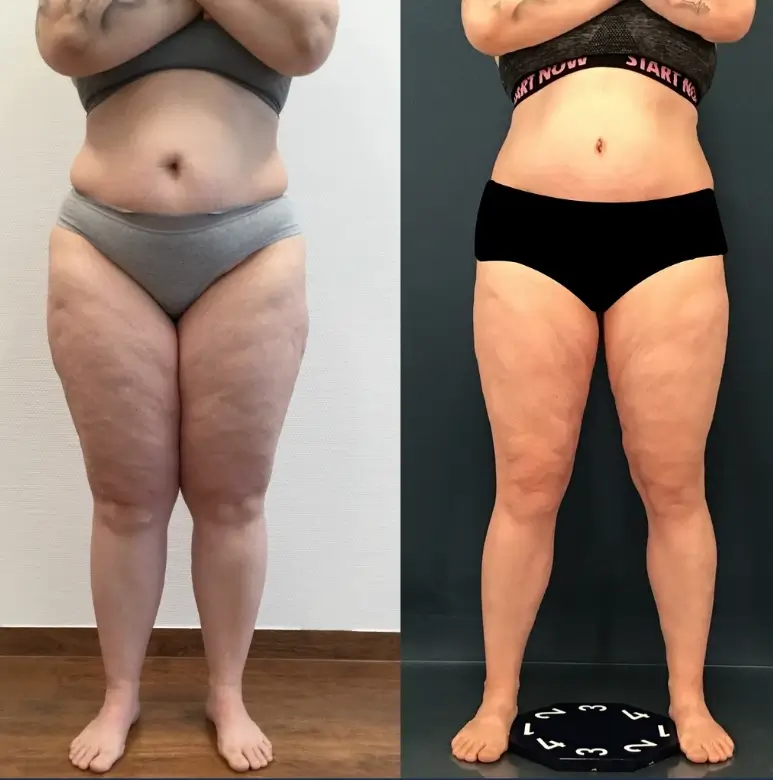
It's now clear that lipedema can't be successfully treated overnight. Patients often describe a daily, years-long struggle against the condition, not least because it's burdened with so many social prejudices. "You should just eat less!" or "maybe try exercising a bit more!" are typical reactions from outsiders that those affected have to face. Lipedema is often not understood as a medical condition, but rather as self-inflicted overweight. And this lack of understanding means, above all: frustration, guilt, insecurity for patients. In many cases, they withdraw out of fear of rejection. The disproportionate fat distribution in lipedema, along with visible dents and bruising, affects body image and, in turn, the self-esteem of the women affected. Self-love and self-acceptance shrink, while feelings of shame grow. This leads people to avoid social activities and become isolated. Long-term emotional stress and withdrawal from one's surroundings are unhealthy and make people sick - specifically, mentally ill. Depression, anxiety disorders, and eating disorders are just some of the possible psychological consequences of lipedema.

Not sure if this applies to you?
Book a free, no-obligation consultation with our specialists.
Support Options and Help for Lipedema-Related Psychological Strain
It's already well known that mental health struggles are still far too often treated as taboo, even today. The shame is often too great, and many would rather suffer quietly than address the issue. But that inevitably comes at the cost of quality of life - and that doesn't have to be the case, in our view at med-plast.
Openness is needed! Support - including emotional support - shouldn't be something to be ashamed of. You don't just have to endure psychological symptoms - you can, and should, address them. An open conversation about your feelings often brings relief, whether with a family member, an anonymous crisis helpline, or a trained psychologist. Alongside professional support services, there are also support groups, both online and in person, where those affected can connect with one another and help each other work through and overcome the emotional hurdles. Because even though it often may not feel that way, patients aren't alone with this problem.
And How Can med-plast Help Me With This?
It's simple - we know lipedema very well, because it's all we do.
That's why, alongside our understanding of the accompanying psychological challenges, we also have a deep understanding of the physical processes involved in lipedema.
And, as is well known, the two are closely linked.
We don't just explain the basics of lipedema to you - we also explain your individual symptoms, based on your specific severity and distribution!
Through this understanding of what's happening in your own body, an "aha moment" almost always occurs, at the latest during the physical examination. Understandably, this new insight also relieves the mind. Realizing that you're not to blame for your own situation, or understanding what can still be improved through your own actions, helps enormously in accepting the condition of lipedema. As a result, patients can approach the situation with greater ease. Because - to put a common fear to rest right away - it's not true that lipedema always only gets worse and, left untreated, ends in a wheelchair!
Of course, we can also work out a precisely tailored plan for surgical treatment, but that takes time and only makes sense once your individual acceptance threshold has already been clearly crossed.
Conclusion
The physical changes in lipedema always follow the same mechanisms, but their severity over time is highly individual. That, of course, applies especially to the psychological side as well!
Why is that? Because every person affected by lipedema has a different predisposition, with different triggers and an equally different course of progression.
The physical changes caused by lipedema are measurable - the psychological ones aren't. But they influence each other and are closely interdependent.
If you'd like, we're happy to examine you too! A thorough, individual consultation afterward will hopefully bring you not just an "aha moment," but also direct psychological relief.