




In this article, we explain the basic principles behind this frequently asked question:
- What lipedema is and how it's treated.
- What matters is what fat remains, not just what's removed.
- Every patient is different, so the amount of fat removed differs too.
What Is Lipedema and How Is It Treated?
Lipedema is a pathological fat-distribution disorder that affects almost exclusively women and has a genetic component. The causes of the condition are still not well understood. There are no tests or procedures that can definitively identify lipedema. In most cases, diagnosis is made "clinically" - meaning an experienced plastic surgeon, phlebologist, or similar specialist makes the diagnosis based on body proportions, the condition of the skin and fatty tissue, together with the physical symptoms described by the patient.
Examinations such as a CT scan, MRI, ultrasound, or lymphography can add supporting information that increases diagnostic certainty on their own. In most cases, though, these examinations aren't necessary.
Lipedema cannot be cured. Conservative treatments such as manual lymphatic drainage or flat-knit compression garments only relieve symptoms in the short term. The only method that can sustainably resolve lipedema symptoms - pain, tenderness to the touch, a feeling of heaviness, bruising, restricted movement, and increasing fatty tissue - is lipedema liposuction.
What Is Liposuction and How Does It Work?
In cosmetic ("aesthetic") liposuction, often only localized fat deposits are treated - for example, "saddlebags" or similar areas. Of course, larger amounts of fat can also be removed in aesthetic procedures. In these cases, the remaining fat layer can vary considerably. With limited skin quality, it's sometimes necessary to leave a bit more fat in place, so the remaining volume still supports the skin enough for it to appear as smooth as possible. Smaller procedures like these can be performed under local anesthesia, "twilight sleep," or general anesthesia, depending on scope.
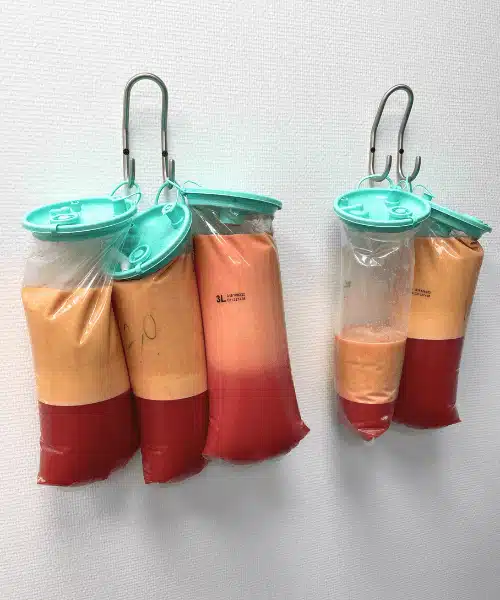
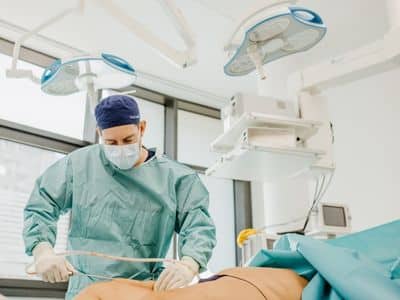
Lipedema liposuction, by contrast, is a special form of liposuction. These are large, medically indicated procedures involving many times more fat volume to be removed. This kind of lipedema liposuction treats the condition comprehensively, with a holistic approach, and always on a highly individual basis. Depending on distribution and consistency, the diseased, excess fatty tissue is removed as gently as possible using fine cannulas. The med-plast clinic offers the full range of liposuction methods, including "water-assisted liposuction" (WAL), laser-assisted lipolysis, and ultrasound-assisted liposuction.
Not sure if this applies to you?
Book a free, no-obligation consultation with our specialists.
Can All the Fat Be Removed?
In lipedema surgery, it's not just individual areas that are treated, but entire regions - legs, arms, and torso - suctioned three-dimensionally. Naturally, these surgeries are also performed with the goal of achieving the most aesthetic result possible. What matters fundamentally here is leaving behind the best possible individual residual layer, which must be preserved as thermal and mechanical protection. At the same time, as much of the "lipedema fat cells" as possible must be removed - but not everything, which is what makes the highest standard of lipedema surgery so demanding. Once the "necessary base layer" is reached, the risk of extensive recurrence becomes very unlikely, since the remaining lipedema cells can no longer divide to the same extent. Any remaining lipedema cells could, of course, react to a trigger again and swell, but only in a locally limited way. These areas could then potentially be treated with physiotherapy, physical methods (such as ultrasound treatment), or localized liposuction. By the end of lipedema treatment, liposuction should have reduced the pressure on the lymphatic system. This lessens tissue inflammation and eases pain. Patients report noticeably greater freedom of movement, a reduced feeling of heaviness in the legs, and a corresponding improvement in quality of life.
How Much Fat Can Be Removed in Liposuction?
A precise statement about how much fat will be removed before surgery cannot be predicted, and making one wouldn't be serious or useful.
Every patient's situation is highly individual. As a result, it can't be assumed that two patients with the same build, height, and weight would lose the same amount of fat volume from the same treated region. Influencing factors, such as body build, fat distribution, and skin thickness, are key criteria here. Connective tissue and internal tissue pressure also play a decisive role in how much fat volume remains after the best possible surgery. What always matters is the remaining layer thickness, which must be preserved to maintain thermal and mechanical protection. This layer thickness is highly individual for each patient and ultimately determines how much fat can be removed. So the priority isn't primarily how much fat is ultimately removed, but what needs to remain in the best possible way. On top of that, there are limits to the body surface area that can be treated and limits to the volumes that can be removed within medically safe boundaries. So it's only ever at the end of each surgery that the exact number of liters of fat removed becomes clear.
Important: because of how individual they are, lipedema surgeries can't be compared to one another. If twice as much fat was removed from you compared to the patient in the next bed, that doesn't mean she only received half the treatment! Effort and outcome are always matched to the individual: as much removal as is individually possible, as few surgical steps as necessary!